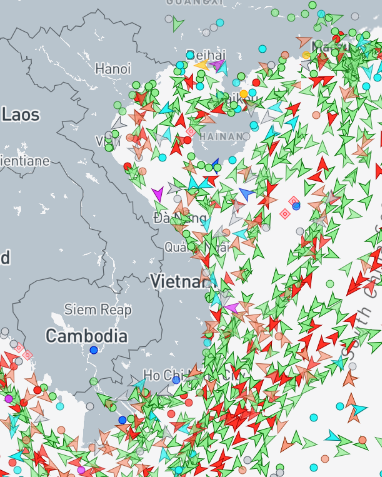
Asian shippers are facing high freight rates and a lack of capacity on the intra-Asia trades; challenges brought on by vessel diversions around the Cape of Good Hope. Exporters are also grappling with equipment shortages and the impact is significant on key trade routes, like China-Vietnam and China-Thailand, where deep-sea services make up a growing share of intra-Asia volumes.
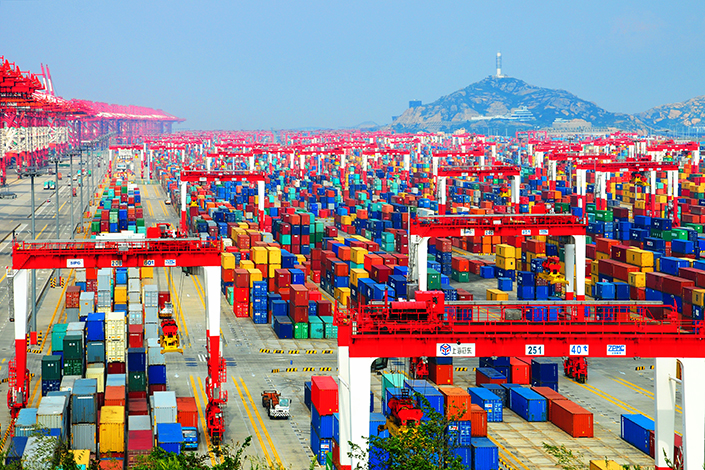
Deep-sea services accounted for about 64% of total quarterly capacity between China and Vietnam in Q4 2023, up from almost 58% a year prior, according to data by MDS Transmodal. The data shows blue water services provide approximately 50% of the capacity between China and Thailand and 90% of space between China and Singapore.
The problems are expected to hit the peak shipping period right before the Lunar New Year, which starts on February 10, as factories rush to complete orders before closing for two weeks. Consequently, intra-Asia shippers will be disproportionately affected by equipment shortages as mainline carriers prioritize deep-sea trades.
Research firm Linerlytica indicated the capacity shortfall would happen at the month's end when vessels on Trans-Pacific and Asia-Europe services sail via Southern Africa to avoid delays at the Panama Canal and the attacks in the Red Sea.
“The impact of the diversions will impact capacity available for departures from Asia starting from week 4 onwards, with significant drops in Asia-Europe and U.S. East Coast capacity of up to 30% on certain weeks,” it said. Linerlytica also noted that delays have created an equipment shortage due to the late return of containers back to Asia, while box makers have sharply ramped up production of new containers since December.
How the Year Can Potentially Unfold Amid Red Sea Challenges
Shippers are facing unexpected challenges in their containerized supply chains due to recent attacks on shipping in the Red Sea. The outcome for the rest of the year depends on when the attacks cease and safe navigation is restored in the waterways connected to the Suez Canal.
Regardless of the security situation, the disruption has already shifted the supply-demand balance that will take months to unwind.
The near-term outlook suggests disruptions with shippers facing space and equipment shortages, along with increased rates out of Asia. This will be followed by a gradual "new normalization" over the first half of the year as shipping networks adjust to new routing patterns, whether around the Cape of Good Hope or back through the Suez Canal.
Evidence of space and equipment shortages is already emerging in the current market. A local source told JOC that empty container inventories were quickly dwindling in Asia, and container lease rates were surging. The extended transit around the Cape of Good Hope is delaying equipment return turnaround times. Additionally, soft market conditions from the previous year have also led carriers to be more flexible, allowing additional free time for containers at destinations and further complicating the return process.
The five weeks leading up to the Chinese New Year are predicted to be challenging. However, the market is expected to stabilize, given that this disruption is driven by supply issues rather than demand.
Source: Journal of Commerce